Commercial cleaning robots for business: a guide before purchase or pilot
The right question is not which robot has the longest feature list. It is which clearly defined cleaning task can be transferred into stable, responsible operation.
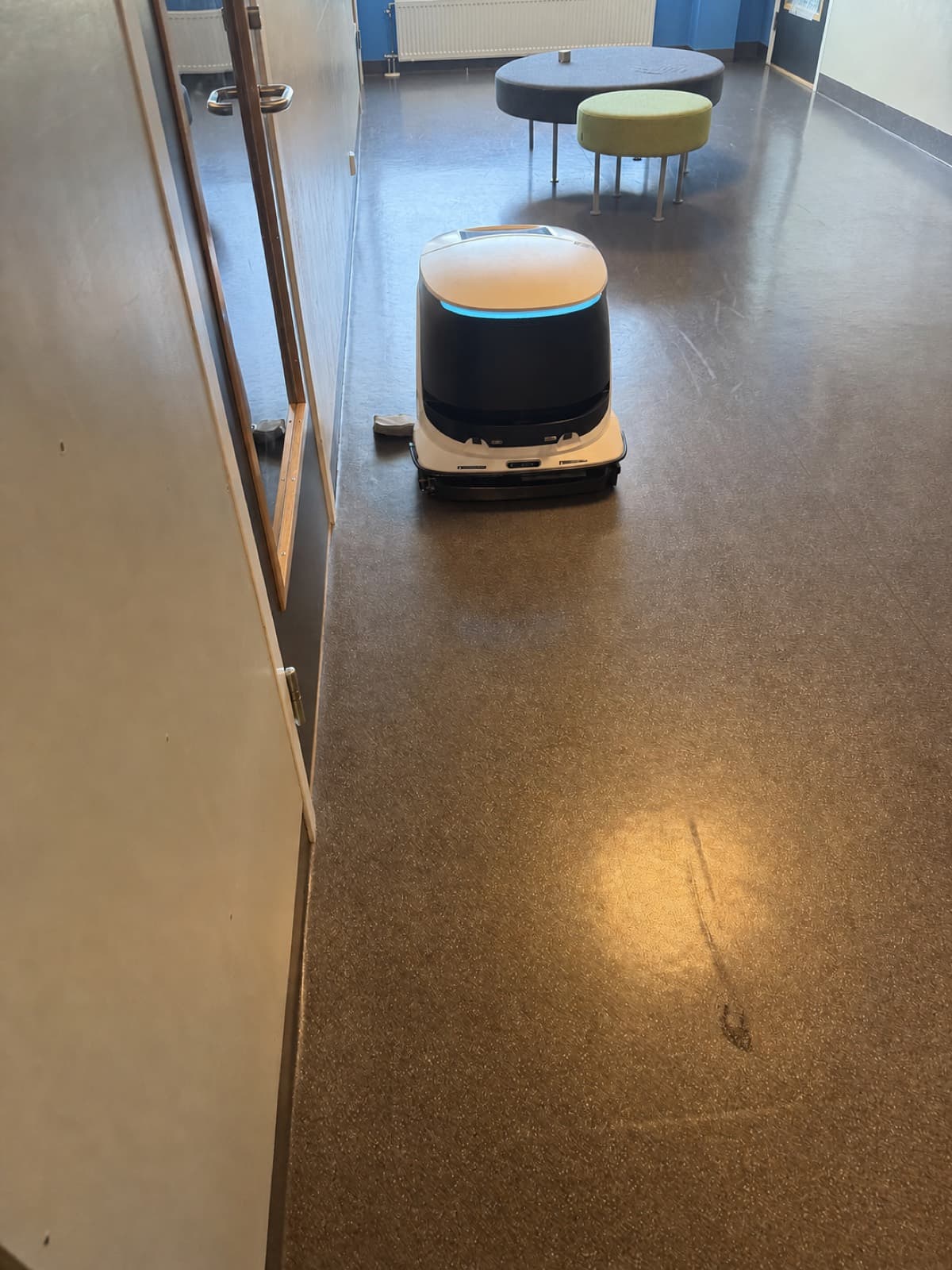
Define the cleaning task before comparing machines
Start with a bounded task: area, floor, dirt, cleaning method, quality requirement and available operating windows. A model can only be relevant when these conditions are understood.
Keep edges, stairs, toilets, furniture and emergency spills visible as remaining manual work rather than hiding them from the business case.
Map the real building
Floor plans are useful, but normal operation includes moving people, deliveries, cables, temporary displays, doors, lifts and changing routes.
Include winter conditions, entrance dirt and local safety routines where they affect the task. The assessment should describe both normal operation and likely deviations.
Use a pilot—not only a demonstration
A demonstration shows that a machine can complete a run under the conditions at that moment. A pilot tests whether a defined task can become part of normal operations over time.
Agree the baseline, test period, measurement method and decision criteria before the pilot starts.
- planned and completed task
- interruptions and causes
- human preparation and follow-up
- inspection of the cleaning result
- changes in traffic, obstacles and routines
Compare the full operating model
Purchase, leasing and service-based delivery should be compared over the same period and with the same task and quality requirement.
Include implementation, training, internal work, software, service, consumables, expected maintenance and exit conditions. Manufacturer dashboards are not in themselves proof of cleaning quality or economic impact.
Make responsibility explicit
Stable operation requires known support channels and clear responsibility for daily checks, deviations, maintenance, documentation and changes to the building.
If these answers are missing, the next step should be assessment rather than a product quote. If they are clear, the pilot can target the most important remaining uncertainty.