Cleaning robots for schools: entrances, obstacles and operating windows
An empty school corridor can look simple. During a normal day, pupils, bags, chairs, spills, events and seasonal entrance dirt continually change the working area.
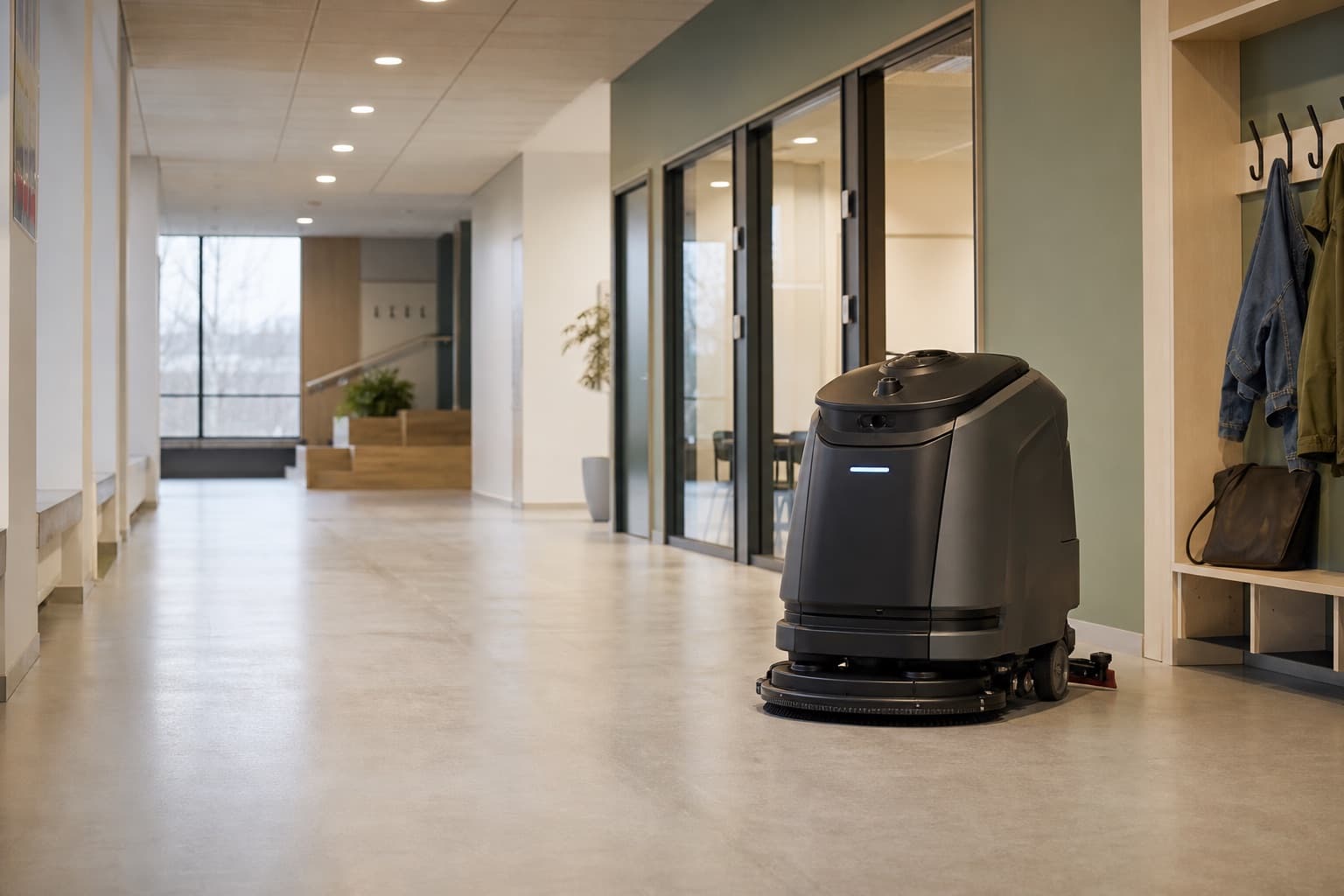
A school is not one uniform working area
Corridors, entrances, dining areas, sports halls and shared spaces have different floors, traffic patterns and availability. A solution suited to one zone may be unsuitable in another.
Divide the building into concrete tasks with a defined area, quality requirement, operating window and stop conditions.
Assess entrance zones separately
Norwegian entrance areas change with weather and season. Water, snow, grit, mats, thresholds and frequent traffic can create a different task from the rest of the building.
The purpose is not to prove that the entrance can be automated. It is to identify what must be tested and what should remain outside the first phase.
- floor materials, mats and transitions
- doors, thresholds and narrow passages
- seasonal water, grit and dirt
- periods when the area must remain available
- work that still requires manual handling
Document obstacles that actually move
A floor plan shows walls and fixed installations, but not bags, chairs, temporary barriers or equipment moved during the day.
Cleaning staff and other people who know the building should contribute to the assessment. Record what blocked a route, whether it was expected and how much human intervention was needed.
Define ownership before the pilot
Autonomous operation does not remove responsibility. Someone must prepare the area, check the machine, manage consumables, respond to deviations and inspect the cleaning result.
Ownership should be explicit across the school, cleaning organisation, property operations and service partner. Training must cover limitations and escalation—not only start and stop.
Use the pilot to reduce the right uncertainty
A useful pilot tests a defined zone during representative operating windows. It records the planned and completed task, deviations, human follow-up and quality control.
End with a clear decision: continue, adjust, test another zone or stop because the assumptions do not hold.